

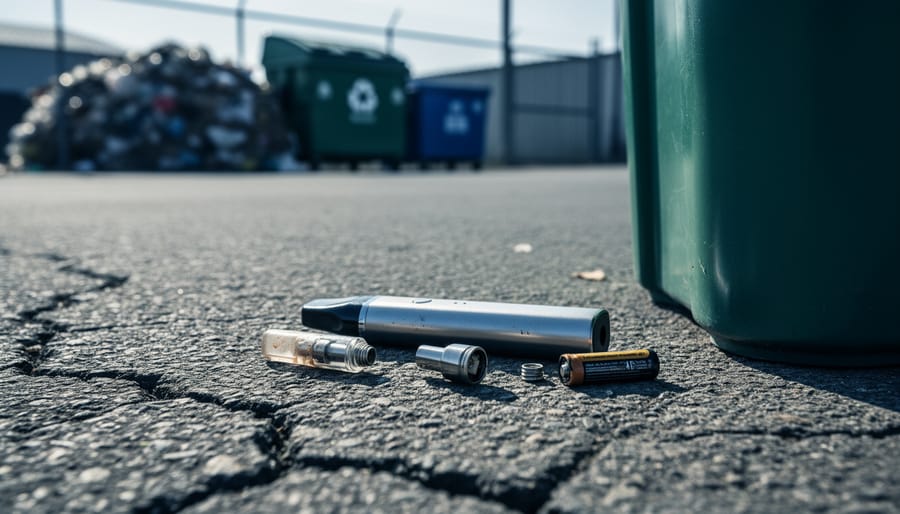
No, vape waste is not officially classified as hazardous by the EPA under federal regulations, but this doesn’t mean it’s safe to toss in your regular trash. The reality is far more complex and environmentally significant. Disposable vapes and their components contain lithium-ion batteries, heavy metals like lead and mercury, nicotine residue, and plastic cartridges that pose serious risks to human health and ecosystems. These items fall into a regulatory gray area where they should be treated as both electronic waste and potentially hazardous material, yet most consumers dispose of them incorrectly, sending millions of toxic units to landfills each year.
Understanding this classification gap matters because vape products are now among the fastest-growing waste streams in the United States. When crushed in garbage trucks or buried in landfills, their batteries can leak toxic chemicals into soil and groundwater, while improperly discarded units have caused fires at waste facilities across the country. The nicotine alone, which remains in used cartridges, is classified as an acute hazardous waste in its pure form but lacks clear disposal guidance when contained in consumer vaping devices.
This article cuts through the confusion to explain exactly why vape waste sits in regulatory limbo, what environmental and health threats these products create, and most importantly, how you can dispose of them responsibly today. Whether you’re a concerned citizen, a school administrator dealing with student vape waste, or a policy maker exploring solutions, you’ll find clear answers and practical steps to address this growing environmental challenge. The path forward requires both individual action and systemic change, and both are within reach.
Understanding EPA Hazardous Waste Classification
The EPA’s approach to hazardous waste classification stems from the Resource Conservation and Recovery Act, a comprehensive federal law that governs how we handle materials that pose serious risks to human health and the environment. Understanding this framework is essential for grasping why vape waste sits in such a complicated regulatory position.
Under RCRA, the EPA classifies waste as hazardous based on either its source or its characteristics. The characteristic-based classification system evaluates waste against four RCRA waste characteristics that determine whether a material requires special handling and disposal protocols:
- Ignitability
- Waste that can readily catch fire and sustain combustion, creating hazards during transport, storage, or disposal. Lithium-ion batteries in vapes fall into this category due to their fire potential.
- Corrosivity
- Materials that can corrode metal containers or cause severe chemical burns. This includes strong acids and bases with extreme pH levels.
- Reactivity
- Substances that are unstable under normal conditions, capable of causing explosions or releasing toxic fumes when mixed with water or other materials.
- Toxicity
- Waste containing concentrations of specific toxic substances that could contaminate groundwater or harm ecosystems. Nicotine and heavy metals meet this threshold at certain concentrations.
When waste meets any of these criteria, it triggers a cascade of regulatory requirements. Generators must track quantities, use specific containers with proper labeling, maintain detailed records, and ensure transportation only by licensed hazardous waste haulers. Disposal facilities must meet stringent operational standards and obtain special permits.
The challenge with vape products is that they contain multiple components that individually might qualify as hazardous, but the products themselves occupy a gray zone. A lithium battery is clearly ignitable. Concentrated nicotine is demonstrably toxic. Yet an intact disposable vape that contains both doesn’t fit neatly into existing hazardous waste categories, creating confusion for consumers, waste haulers, and municipalities trying to protect their communities.
This classification gap matters because without clear hazardous waste designation, vape products often end up in regular trash streams where they pose exactly the risks RCRA was designed to prevent.
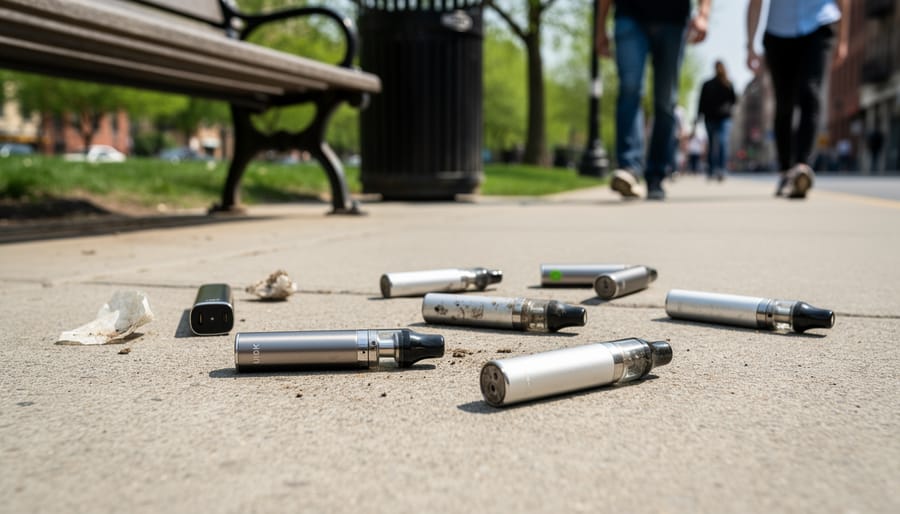
The Components That Make Vape Waste Potentially Hazardous
Lithium-Ion Batteries: The Fire Hazard
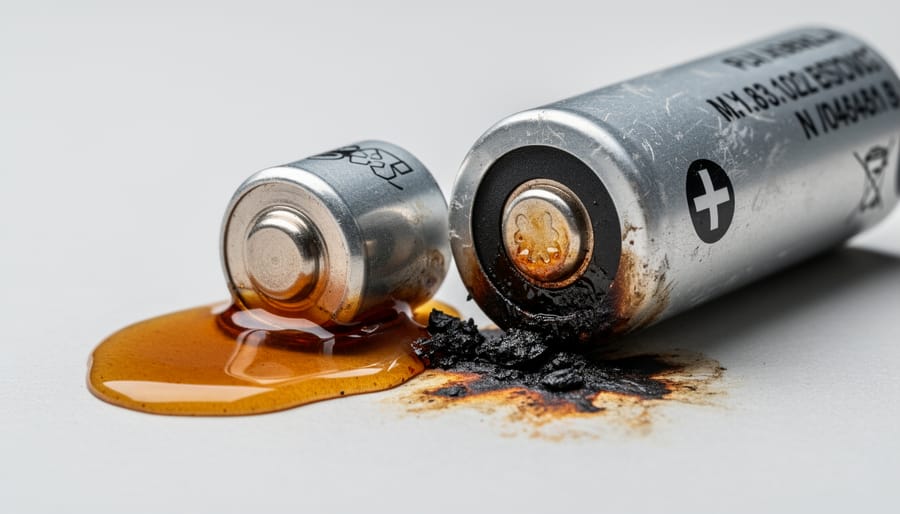
Lithium-ion batteries power most disposable vapes, and they represent one of the most dangerous components when these products enter the waste stream. Unlike alkaline batteries, lithium-ion cells contain flammable electrolyte solutions that become volatile when punctured, crushed, or exposed to moisture, all common scenarios in garbage trucks and landfills.
Waste management facilities across the country report a sharp increase in fires directly attributed to vape batteries. When these small batteries get compressed with other trash, internal short circuits can trigger thermal runaway, a chemical reaction that produces intense heat and flames. A single battery can ignite surrounding materials, leading to vehicle fires or facility-wide blazes that endanger workers and cost municipalities hundreds of thousands of dollars in damage.
Beyond fire risk, these batteries contain heavy metals including cobalt, lithium, and manganese. When batteries corrode in landfills, these metals leach into soil and groundwater, creating long-term contamination. The compact size of vape batteries makes them particularly problematic, they easily slip through sorting equipment at recycling centers, ending up where they don’t belong and multiplying the contamination risk throughout waste management systems.
Nicotine Residue: An Acute Toxin
Nicotine, the primary active ingredient in e-liquids, presents serious toxicity concerns when improperly disposed. The EPA has recognized the nicotine acute toxicity basis and designates it as P075 under hazardous waste regulations when it exceeds certain concentration thresholds. In concentrated form, nicotine can cause severe poisoning with as little as 30-60 milligrams proving fatal to adults. Most disposable vapes contain 1-2 milliliters of e-liquid with nicotine concentrations ranging from 20 to 50 milligrams per milliliter.
When discarded vapes break open in landfills, nicotine residues can leach into surrounding soil and migrate into groundwater systems. This contamination poses risks to aquatic ecosystems and potentially drinking water supplies. Nicotine persists in soil for weeks to months, and its metabolites remain detectable even longer. Children and pets face particular danger from discarded devices with remaining e-liquid, as even small exposures can cause vomiting, seizures, or respiratory distress. The sweet flavoring in many e-liquids masks nicotine’s bitter taste, increasing accidental ingestion risk.
Heavy Metals and Plastic Components
Beyond batteries and nicotine, vape devices contain heavy metals that pose long-term environmental threats. Lead solder used in device assembly and nickel from heating coils can leach into soil and groundwater when vapes end up in landfills. These metals bioaccumulate in living organisms and persist in ecosystems for decades.
The plastic casings present another dimension of the problem. Most vape devices use polypropylene or polycarbonate that breaks down into microplastics rather than biodegrading. These fragments contaminate soil, enter waterways, and ultimately work their way into the food chain. A single disposable vape can release thousands of microplastic particles as it degrades.
The combination of toxic metals and persistent plastics means vape waste creates contamination that outlasts the product’s brief functional life by generations.
Current EPA Classification Status in 2026
The short answer to whether vape waste is classified as hazardous by the EPA is: it’s complicated. As of 2026, no federal regulation explicitly categorizes intact, discarded vape products as hazardous waste. However, this doesn’t mean vape waste is safe or should be treated as ordinary trash. The components within these devices, lithium-ion batteries, residual nicotine, and heavy metals, individually meet criteria for hazardous waste under the Resource Conservation and Recovery Act (RCRA), creating a regulatory gray zone that leaves both consumers and waste management facilities uncertain about proper handling.
Under RCRA, the EPA classifies waste as hazardous if it exhibits ignitability, corrosivity, reactivity, or toxicity. Lithium-ion batteries are ignitable and reactive. Concentrated nicotine qualifies as acutely hazardous due to its toxicity threshold. Heavy metals like lead and nickel fall under toxicity criteria. Yet when these components are combined in a sealed disposable vape device, the product as a whole hasn’t been designated as universally hazardous at the federal level. This gap exists partly because vape products emerged after many existing waste regulations were written, and partly because the EPA has been slow to address this rapidly growing waste stream.
The classification ambiguity has created a patchwork of state and local responses. Some municipalities have issued guidance treating vape products as household hazardous waste, requiring special collection. California, for instance, considers devices containing lithium batteries as hazardous waste that cannot be thrown in regular trash. Vermont has implemented extended producer responsibility legislation that holds vape manufacturers accountable for end-of-life management. Meanwhile, other states have no specific regulations, leaving vape waste to enter landfills alongside kitchen scraps and cardboard.
Recent regulatory developments suggest change may be coming. The EPA has acknowledged the environmental risks posed by lithium battery waste and is evaluating options for updated regulations. Several environmental advocacy groups have petitioned for formal hazardous waste classification. However, until federal action occurs, the responsibility falls to individuals and communities to bridge the gap between what the regulations say and what the science shows about vape waste risks.
Why the Classification Gap Creates Environmental Health Risks
The regulatory ambiguity around vape waste classification creates a dangerous vacuum where these products fall through the cracks of our waste management systems. When neither consumers nor waste handlers receive clear guidance on treating vapes as hazardous materials, the consequences ripple across multiple environmental and public health domains.
Most vape users dispose of their devices in household trash, treating them like ordinary garbage. This sends lithium-ion batteries and nicotine residues directly to municipal landfills, where they weren’t designed to go. Landfill operators typically lack protocols for identifying and segregating vape waste from general refuse. As these devices degrade, batteries can rupture, leaching heavy metals into groundwater. Nicotine residues dissolve into leachate, potentially contaminating soil and water supplies near disposal sites.
Contamination of recycling streams presents an equally serious problem. Well-intentioned consumers often toss vapes into recycling bins, assuming the metal and plastic components belong there. Once these devices enter automated sorting facilities, their batteries create immediate fire hazards. According to waste management professionals, lithium-ion batteries from various electronics now cause dozens of fires annually at recycling centers nationwide. San Francisco documented six major fires at its recycling facility between 2021 and 2025, with investigators identifying vape batteries as contributing factors in several incidents. These fires not only endanger workers but also release toxic fumes and destroy tons of legitimately recyclable materials.
Beyond fires, the physical presence of vapes in recycling streams contaminates otherwise clean material stocks. Crushed batteries release electrolyte chemicals. Residual nicotine coats plastics and metals, making them unsuitable for reprocessing. Recycling operators in Seattle reported having to reject entire bales of aluminum because vape contamination rendered them unmarketable to manufacturers.
The classification gap also undermines public awareness. Without hazardous waste designation, manufacturers face no requirement to provide disposal instructions or warnings. Retailers aren’t obligated to inform customers about proper handling. This information vacuum persists while vape use expands, creating a growing environmental time bomb.
Municipal waste coordinators from Portland to Philadelphia report similar frustrations: they recognize vape waste as hazardous but lack regulatory authority to mandate specialized handling. They’ve watched collection volumes increase while facing budget constraints that prevent implementing voluntary take-back programs. The result is a widening disconnect between the scale of the problem and communities’ capacity to address it safely.
How Different Jurisdictions Are Responding
Several forward-thinking jurisdictions have stepped ahead of federal regulators to address vape waste directly. California led early action with SB 38, passed in 2022, requiring retailers that sell vaping products to accept used devices for proper disposal. The law makes producers responsible for establishing collection programs, shifting the burden from consumers and municipalities to manufacturers. By 2026, California’s program has collected over 12 million used vape devices, preventing them from entering landfills and contaminating recycling streams.
San Francisco took an even more aggressive stance by banning the sale of disposable vapes entirely in 2024. While controversial among retailers, the city’s approach has virtually eliminated disposable vape waste from its municipal waste stream within two years. Reusable vaping devices with replaceable components now dominate the market there, and specialized battery collection points at retail locations have made proper disposal convenient.
New York established a statewide producer responsibility framework in 2025 that requires vaping product manufacturers to fund a comprehensive takeback program. Participating retailers provide free mail-back envelopes, and the state has partnered with existing hazardous waste facilities to process collected devices. The program has achieved an impressive 40% return rate in its first year.
At the municipal level, Boulder, Colorado created a dedicated vape waste drop-off program integrated into its existing hazardous household waste collection. The city partnered with a specialized recycling company that safely extracts lithium from batteries and processes the toxic components separately. Boulder’s model costs approximately $15,000 annually but has kept an estimated 200,000 vape devices out of landfills since 2024.
These pioneering efforts demonstrate that local and state action can fill regulatory gaps. They also provide tested blueprints for other communities seeking practical solutions while federal classification remains unresolved.
What This Means for You: Proper Vape Waste Disposal
Whether or not the EPA officially classifies your vape device as hazardous waste, treating it that way protects your community and the environment. Here’s how to safely dispose of vape products in three straightforward steps.
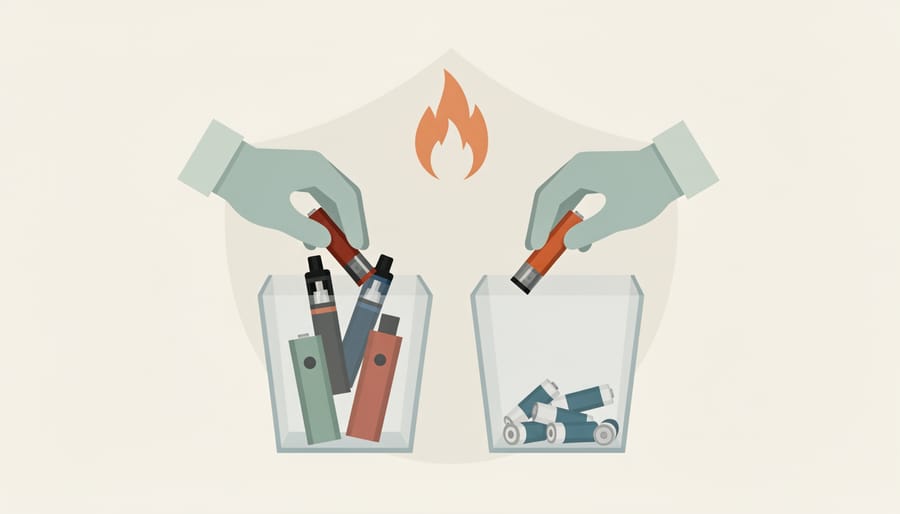
First, never toss vape devices in household trash or recycling bins. The lithium-ion batteries pose serious fire risks in garbage trucks and at sorting facilities, while nicotine residues can leach into groundwater. These items need specialized handling.
Start by locating your nearest collection point. Most communities offer several options. Check with your local household hazardous waste facility, many accept vape devices during regular collection events or at permanent drop-off locations. Retail stores including Best Buy and some vape shops provide battery recycling kiosks where you can deposit the entire device. Call2Recycle operates drop-off locations at thousands of retail partners nationwide, searchable through their website by zip code.
Once you’ve identified where to take your vape waste, prepare it properly:
- If possible, remove the cartridge or pod from the battery component (check your device manual if you’re unsure how).
- Place the battery in a clear plastic bag to prevent short-circuiting during transport, never let metal terminals touch other batteries or metal objects.
- Seal any cartridges with remaining e-liquid in a separate plastic bag to contain nicotine residues.
- Transport everything to your chosen collection point within a few days, don’t let vape waste accumulate at home.
If you encounter resistance or confusion at a collection site about accepting vapes, explain that the lithium-ion battery qualifies as hazardous electronic waste. Some facilities may not have specific vape policies yet but will accept the components as batteries and e-waste.
For workplaces, schools, or multi-unit housing where vape disposal is a recurring issue, consider organizing a designated collection container and scheduled drop-offs. Contact your waste hauler about establishing a program, they’re often willing to accommodate once they understand the fire risk.
Advocating for Better Vape Waste Management
You can drive meaningful change in vape waste management by channeling concern into targeted action. Start locally by attending city council or county board meetings to raise vape waste as an environmental health priority. Bring concrete examples, photos of vape litter from local parks, data on fire incidents at your regional waste facility, or testimonials from sanitation workers facing exposure risks. Local officials respond to constituents who show up prepared with specific problems and potential solutions.
Contact your state legislators to support extended producer responsibility bills that shift disposal costs from taxpayers to vape manufacturers. Organizations like Product Stewardship Institute and Environmental Health Trust provide model legislation and advocacy toolkits you can share with policymakers. When contacting elected representatives, emphasize the dual burden vape waste creates: environmental contamination and municipal budget strain from specialized handling requirements.
Partner with environmental and public health organizations already working on tobacco control or e-waste issues. Many groups are expanding their focus to include vaping products and need grassroots support. Offer to help organize community collection events, distribute educational materials at schools and community centers, or testify at regulatory hearings about local impacts you’ve witnessed.
Push retailers who sell vaping products to establish take-back programs. Pharmacies, convenience stores, and vape shops can partner with certified e-waste recyclers to provide free drop-off locations. Publicly recognizing businesses that implement responsible disposal options creates positive incentives while building pressure on competitors.
Educate your networks through social media, community newsletters, and neighborhood associations. Most people disposing of vape products improperly simply don’t know better. Share accurate disposal information, highlight local hazardous waste collection dates, and frame proper vape waste handling as a community health protection measure everyone can practice.
The question of whether vape waste is classified as hazardous by the EPA doesn’t have a simple yes or no answer, but the environmental and health threats it poses are unambiguous. While federal regulations haven’t caught up with the rapid proliferation of disposable vapes, the lithium-ion batteries, nicotine residues, and heavy metals these products contain present clear hazards to waste workers, communities, and ecosystems. Waiting for comprehensive federal classification shouldn’t prevent us from taking action now.
The most effective approach is treating all vape waste as hazardous, regardless of its official designation. This means never tossing vape products in household trash or recycling bins, properly removing batteries before disposal when possible, and utilizing hazardous waste collection programs. These individual actions, multiplied across millions of users, prevent fires at waste facilities, protect groundwater from contamination, and reduce the burden on frontline waste workers.
Beyond personal responsibility, systemic change requires collective pressure. Supporting extended producer responsibility legislation, advocating for municipal vape waste programs, and demanding better product design from manufacturers can accelerate the transition to safer disposal systems. Communities that have implemented specialized collection programs demonstrate that practical solutions exist when political will aligns with public demand.
The regulatory ambiguity surrounding vape waste classification represents both a challenge and an opportunity. It’s a chance to build disposal infrastructure and policy frameworks before the problem becomes even more entrenched. Your actions matter, whether you’re properly disposing of a single device or organizing community advocacy. Together, we can address this emerging environmental health threat before it becomes a permanent crisis.