

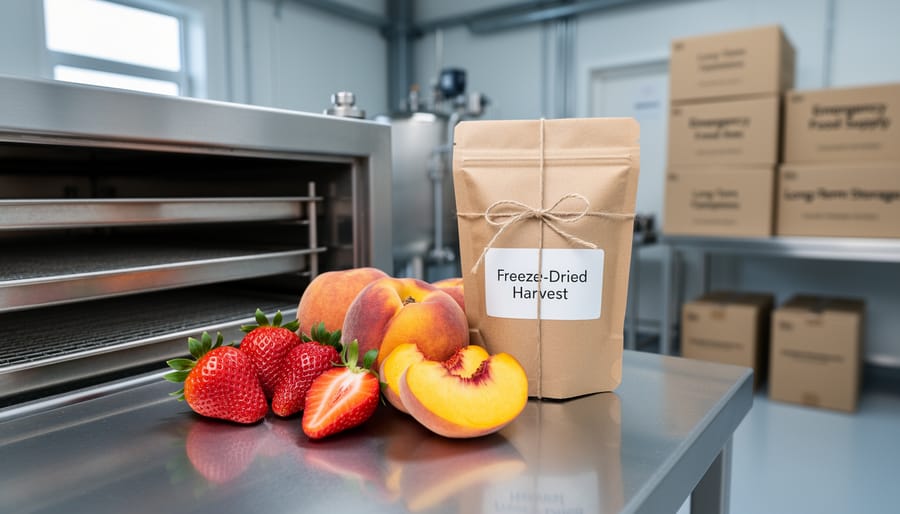
Freeze drying food companies are transforming the fight against food waste by removing up to 99% of moisture from fresh produce, meats, and prepared meals, extending their shelf life from days to decades without refrigeration or chemical preservatives. This technology, once reserved for astronaut meals and pharmaceutical applications, now allows businesses to rescue imperfect produce, surplus harvests, and overstocked inventory that would otherwise decompose in landfills, contributing to the 8-10% of global greenhouse gas emissions tied to food waste.
The process works by freezing food and then using vacuum pressure to convert ice directly into vapor, preserving nutritional content, flavor, and texture far better than traditional dehydration or canning. A freeze-dried strawberry retains roughly 97% of its original vitamin C, compared to 50% or less in conventionally dried fruit. The environmental benefits extend beyond waste reduction: freeze-dried foods weigh 90% less than their fresh counterparts, dramatically cutting transportation emissions and eliminating the energy-intensive cold chain required for frozen goods.
Companies pioneering this approach range from local operations partnering with regional farms to larger enterprises working directly with food banks and disaster relief organizations. Some focus on rescuing cosmetically imperfect produce rejected by grocery chains, while others specialize in converting surplus restaurant ingredients into lightweight, nutrient-dense emergency food supplies. The technology creates new revenue streams for farmers facing crop surpluses and provides communities with reliable, shelf-stable nutrition that doesn’t depend on constant refrigeration.
Understanding which freeze drying companies prioritize genuine sustainability over greenwashing requires looking at their sourcing practices, energy use, packaging choices, and partnerships with food recovery networks. The most impactful operations integrate renewable energy, work with regenerative farms, and design their products to replace less sustainable alternatives rather than simply adding to consumption.
What Freeze Drying Companies Actually Do
Freeze drying companies take fresh food and transform it into shelf-stable products that can last years without refrigeration, all while retaining most of the original nutrients, color, and flavor. The process itself is elegantly simple in concept but requires sophisticated equipment and precise control to execute at commercial scale.
The freeze drying process starts with flash-freezing food to temperatures well below zero, typically around -40°F. This rapid freezing creates small ice crystals rather than large ones, which helps preserve the food’s cellular structure. Once frozen solid, the food enters a vacuum chamber where pressure drops dramatically. Here’s where the magic happens: the ice transitions directly from solid to vapor without ever becoming liquid, a phenomenon called sublimation.
After sublimation removes about 98% of the water content, the food emerges lightweight, porous, and stable at room temperature. This differs fundamentally from dehydration, which uses heat to evaporate moisture and typically removes only 90-95% of water content while often degrading nutritional quality and texture.
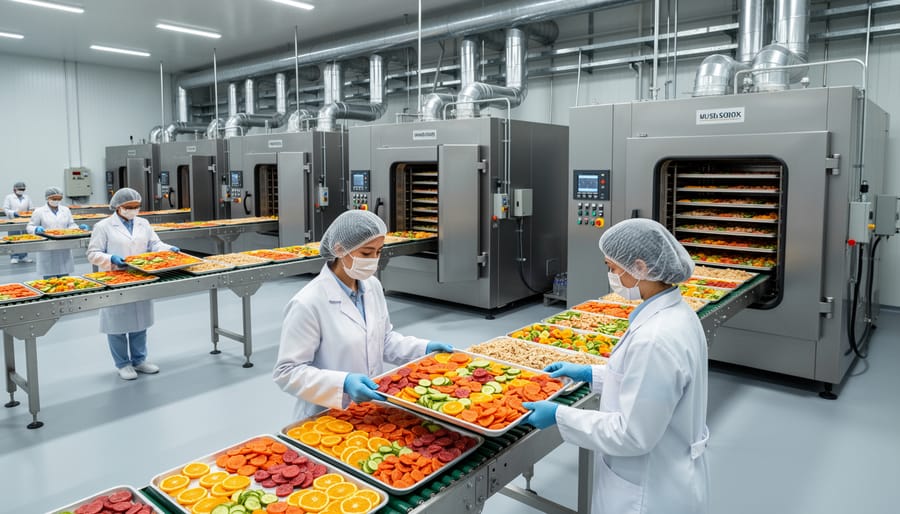
Commercial freeze drying companies operate industrial-scale chambers that can process hundreds or thousands of pounds of food per batch. The infrastructure investment is substantial: a single commercial freeze dryer costs between $50,000 and several million dollars depending on capacity, plus the facility needs reliable power, cold storage for incoming product, and packaging equipment to protect the finished goods from moisture.
Companies process an enormous range of foods. Fruits and vegetables are common candidates, strawberries, blueberries, corn, peas, along with complete meals, soups, dairy products, and even coffee. Some operations specialize in rescue missions, processing cosmetically imperfect produce or seasonal gluts that would otherwise decompose. Others work directly with food manufacturers to create ingredients or with emergency preparedness suppliers to produce long-term storage meals. The versatility of the technology means freeze drying companies can adapt to local food systems, whether that’s preserving a bumper berry harvest in Oregon or extending the life of surplus vegetables from urban farms.
The Sustainability Advantage: Why Freeze Drying Matters for Our Food System
Reducing Energy Costs Across the Cold Chain
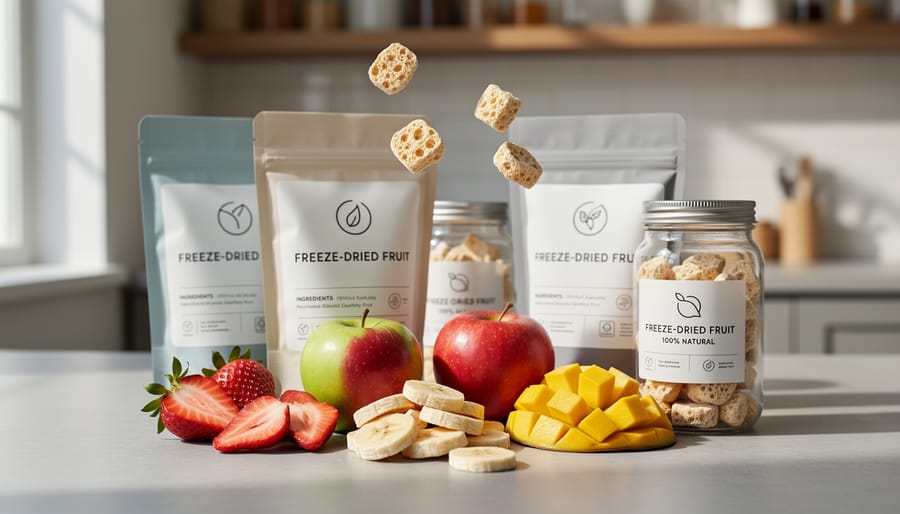
Once food is freeze-dried, it becomes shelf-stable at room temperature for months or even years. This simple fact has profound implications for the energy we consume moving food from farm to table. Traditional frozen and refrigerated foods require uninterrupted cold storage, in warehouses, delivery trucks, retail coolers, and home refrigerators, creating what the industry calls the “cold chain.” This infrastructure demands enormous amounts of electricity, much of it still generated from fossil fuels.
Freeze drying companies break this cycle. Because their products don’t require refrigeration, they eliminate the energy costs of running massive cold storage facilities and refrigerated transport fleets. A pallet of freeze-dried fruits uses roughly 70-80% less energy to store and ship compared to its frozen equivalent, according to food preservation research. The weight reduction matters too: freeze-dried foods typically weigh about 90% less than their fresh counterparts, meaning trucks can carry more product per gallon of fuel burned.
The carbon footprint comparison becomes especially striking over long distribution distances. A shipment of freeze-dried vegetables traveling 2,000 miles in a standard truck produces a fraction of the emissions of the same quantity of frozen vegetables requiring refrigerated transport. When you multiply this across thousands of shipments annually, freeze drying companies that commit to optimizing their distribution networks can demonstrate measurable reductions in supply chain emissions, often 40-60% lower than comparable refrigerated products for the same nutritional value delivered.
Rescuing Imperfect and Surplus Produce
Every year, farms discard millions of pounds of perfectly edible food simply because it doesn’t meet retail cosmetic standards. A carrot with two legs, an apple with a blemish, or tomatoes slightly smaller than the grocery store norm, all nutritionally identical to their shelf-worthy counterparts, often rot in fields or end up in landfill. Seasonal gluts compound the problem. When orchards produce a bumper crop of peaches or berry farms face an unexpectedly abundant harvest, fresh markets can’t absorb the volume before spoilage sets in.
Freeze drying companies are stepping into this gap with practical partnerships. They work directly with growers to purchase and process produce that would otherwise become waste. A freeze drying operation in Oregon, for instance, partners with regional apple growers to convert surplus and cosmetically imperfect fruit into shelf-stable snacks and ingredients. The farmers receive payment for crops they’d normally lose, while the company secures high-quality raw materials at lower costs.
These collaborations create a win across the board. Farmers gain an additional revenue stream and reduce the environmental guilt of plowing under edible food. Communities benefit from affordable, nutritious products made from local harvests. The climate wins too, every ton of rescued produce that gets freeze-dried rather than decomposing represents avoided methane emissions and preserved agricultural resources.
Some companies have built their entire business model around imperfect produce rescue, proving that cosmetic standards shouldn’t determine whether food nourishes people or heats the atmosphere.
Leading Freeze Drying Companies Making a Difference
Several freeze drying companies across North America and Europe are demonstrating how this technology can align commercial success with meaningful environmental impact. These operations range from community-based cooperatives to innovative startups, each tackling food waste through different business models and partnerships.
Harvest Right stands as the most established player making freeze drying accessible beyond industrial operations. While they’re best known for selling home freeze dryers, they’ve partnered with community food preservation networks and extension programs to help neighborhoods process surplus garden harvests collectively. Their equipment has enabled community kitchens and disaster preparedness programs to preserve donated food that would otherwise spoil, creating shelf-stable emergency supplies without refrigeration costs.
On the commercial side, North Bay Trading Co. in California has built its entire operation around rescuing surplus and cosmetically imperfect fruit from regional farms. They work directly with organic growers to process berries, stone fruits, and vegetables that fail grocery store appearance standards. Their freeze-dried products go to food manufacturers, backpacking companies, and increasingly to food banks seeking nutrient-dense, long-lasting donations. The company reports diverting over 2 million pounds of produce from landfills since 2019 and powers their facility with solar arrays that offset 60% of their processing energy.
A different model emerges with Valley Harvesta worker-owned cooperative in Oregon’s Willamette Valley. Founded by small-scale farmers frustrated by post-harvest losses, they collectively invested in freeze drying equipment to process their own crops and those of neighboring farms. Members pay processing fees based on volume, and the cooperative prioritizes seasonal abundance, turning August’s glut of tomatoes and September’s apple surplus into year-round inventory. They’ve also partnered with their county’s food rescue program to process gleaned produce at reduced rates.
| Company | Sustainability Focus | Product Types | Notable Partnerships |
|---|---|---|---|
| Harvest Right | Community food preservation accessibility | Home equipment, educational programs | Extension offices, community kitchens |
| North Bay Trading Co. | Surplus and imperfect produce rescue | Fruits, vegetables, meal components | Organic farms, regional food banks |
| Valley Harvest | Farmer-owned waste reduction | Seasonal produce, bulk ingredients | County food rescue, farm gleaners |
| Harmony House Foods | Zero-waste manufacturing practices | Vegetables, soups, camping meals | Food manufacturers, emergency preparedness suppliers |
Harmony House Foodsoperating since 1989, represents the larger-scale potential when sustainability becomes core company philosophy. Beyond freeze drying vegetables and creating dried soup blends, they’ve implemented a closed-loop water system that recycles condensate from the freeze drying process, reducing water consumption by 40%. Their packaging uses recyclable materials, and they maintain transparent supply chain documentation showing which farms provide their ingredients and how surplus crops get prioritized for processing.
What distinguishes these companies isn’t just the technology they use, but their intentional focus on waste reduction partnerships. They’ve moved beyond simply processing food to creating systems that connect excess supply with genuine need, whether that’s gleaners bringing in rescued crops, food banks receiving shelf-stable donations, or farming communities pooling resources to preserve seasonal abundance.
Challenges and Honest Limitations
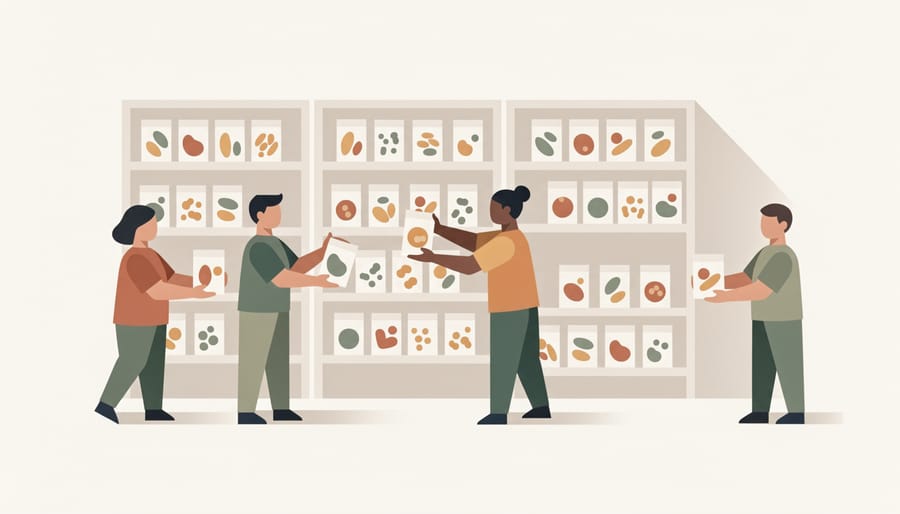
While freeze drying offers remarkable benefits for reducing food waste, we need to acknowledge its limitations to make informed decisions about when and how to deploy this technology effectively.
The process itself is energy-intensive. Freeze dryers must create and maintain a vacuum while cycling temperatures dramatically, first freezing food to -40°F or lower, then raising temperatures to facilitate sublimation over 20 to 40 hours. A commercial freeze dryer can consume 15 to 30 kilowatt-hours per batch, depending on the food type and equipment efficiency. Without renewable energy powering these operations, the carbon savings from eliminating refrigerated storage and transportation can be partially offset by the energy demands of the drying process itself.
Equipment costs present another significant barrier. Industrial freeze dryers range from $50,000 for small commercial units to over $500,000 for large-scale systems. This price point makes entry difficult for community cooperatives, small farms, and food banks that could benefit most from on-site preservation capabilities. Maintenance requirements add ongoing expenses that strain limited budgets.
These financial hurdles create an equity problem. Communities experiencing the highest rates of food insecurity often lack access to freeze drying infrastructure, while wealthier operations can afford both equipment and renewable energy integration. The technology risks becoming another solution that primarily serves those who need it least.
Additionally, freeze drying isn’t ideal for every food. High-fat items like avocados and some dairy products don’t rehydrate well. Certain textures change significantly. The process works brilliantly for fruits, vegetables, and many prepared meals, but it’s not a universal answer.
The path forward requires pairing freeze drying innovation with renewable energy adoption, developing shared-use equipment models that spread costs across multiple users, and directing resources toward communities that would benefit most. Acknowledging these challenges honestly helps us deploy this technology where it creates genuine environmental and social value rather than treating it as a cure-all.
How Communities and Individuals Can Support This Movement
You don’t need to wait for large corporations or government mandates to support freeze drying’s role in reducing food waste. Individual choices and community-level action can accelerate this technology’s adoption and impact right now.
- Choose freeze-dried products from companies with transparent sustainability practices. Look for businesses that publish energy use data, source from local farms, or power operations with renewable energy. Many smaller freeze drying companies openly share their environmental commitments on their websites, making it easier to align your purchases with your values.
- Support local food preservation initiatives and community kitchens. Many municipalities and nonprofit organizations are exploring shared food preservation infrastructure. Volunteer your time, donate equipment, or simply spread the word about programs that rescue surplus produce through freeze drying and other preservation methods.
- Advocate for municipal partnerships with freeze drying operations. Contact your city council or county officials to propose collaborations between waste management departments and freeze drying companies. These partnerships can divert food waste from landfills while creating shelf-stable donations for food banks, addressing both climate and food security simultaneously.
- Explore or start a community-scale freeze drying cooperative. Pooling resources among households, community gardens, or small farms can make this technology accessible at a neighborhood level. Some communities have successfully launched shared equipment programs where members process their garden surpluses, preserve bulk purchases, or rescue local farm seconds together.
- Educate others about freeze drying’s climate benefits. Share what you’ve learned with your networks, schools, or community groups. The technology remains unfamiliar to many people who care deeply about sustainability, and raising awareness creates demand that encourages more companies to adopt environmentally responsible practices.
If you’re part of a farmers market, food co-op, or environmental organization, consider hosting workshops on food preservation technologies including freeze drying. These educational events connect people with practical solutions and often spark collaborations that wouldn’t happen otherwise.
Your purchasing decisions send market signals too. When you buy freeze-dried camping meals, emergency food supplies, or ingredients, prioritize companies that process imperfect produce, minimize packaging, and demonstrate genuine environmental accountability. This creates economic incentives for the industry to prioritize sustainability alongside shelf life and convenience.
Freeze drying companies represent a practical innovation in our transition toward food systems that waste less and withstand more. By converting perishable harvests into shelf-stable products without refrigeration, they address two critical challenges: the staggering volume of food lost between farm and table, and the climate vulnerability of cold-dependent supply chains. This technology won’t solve food waste on its own, but it offers communities and businesses a proven method to preserve nutritional value while dramatically extending usability.
The most encouraging aspect of this movement is its accessibility to action. Every purchase from a sustainability-focused freeze drying company signals market demand for waste reduction. Supporting municipal partnerships that process surplus produce creates local resilience. Advocating for renewable energy integration in freeze drying facilities pushes the technology toward its full climate potential. These aren’t abstract future possibilities; they’re happening now in communities that recognize preservation as climate work.
Building truly sustainable food systems requires multiple tools working together: better harvesting practices, improved distribution networks, composting infrastructure, and yes, advanced preservation technologies like freeze drying. The companies leading this space demonstrate that profitability and environmental responsibility can align when innovation serves both business goals and planetary health.
The choice before us is clear: continue accepting massive food waste as inevitable, or actively support the systems and companies working to eliminate it. Climate resilience starts with the practical decisions we make about how food moves from soil to storage to table.