

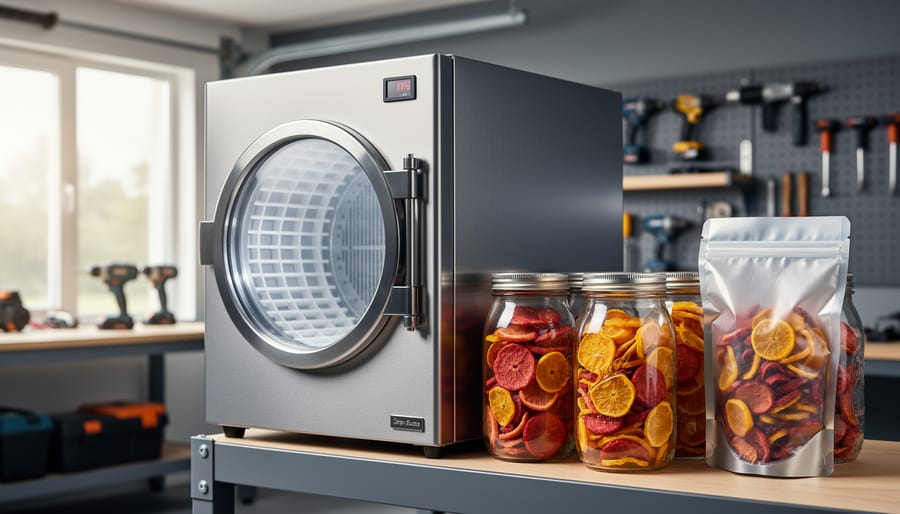
YouTube freeze drying has real sustainability merit, but only when approached thoughtfully. The viral trend showcasing home freeze dryers preserving everything from Skittles to entire meals has sparked genuine interest in long-term food storage, yet the environmental calculus isn’t as straightforward as influencers might suggest. This preservation method can significantly reduce food waste and eliminate the need for refrigeration, two major sustainability wins. However, the machines consume substantial electricity during the 24-hour drying cycles, and the upfront environmental cost of manufacturing these specialized appliances deserves scrutiny.
The sustainable food systems community has watched this trend with cautious optimism. On one hand, freeze drying allows households to preserve garden harvests, rescue surplus produce, and create shelf-stable emergency food supplies without chemical preservatives. A single freeze dryer can theoretically prevent hundreds of pounds of food from reaching landfills each year, where organic waste generates methane, a greenhouse gas 28 times more potent than carbon dioxide over a century. The technology also enables people to reduce trips to the grocery store and store food without continuous energy draw from freezers.
On the other hand, buying a $2,000 to $5,000 appliance that pulls 1,500 watts per cycle raises legitimate questions about net environmental benefit. The answer depends entirely on how you use it. This article examines the science behind freeze drying, evaluates the true sustainability trade-offs based on current research, and provides clear guidance for determining whether this YouTube sensation makes sense for your climate-conscious lifestyle. You’ll learn which applications offer genuine environmental value and which amount to energy-intensive entertainment.
The YouTube Freeze Drying Phenomenon: More Than Just Viral Content
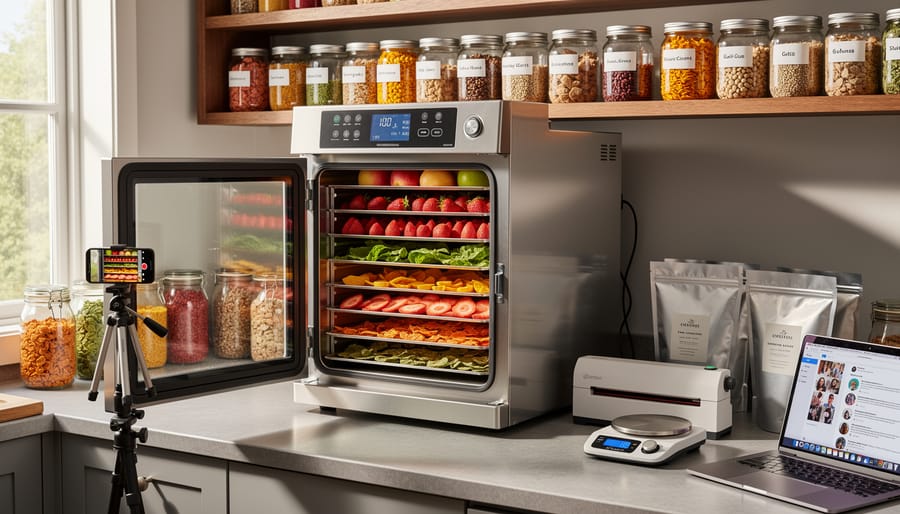
If you’ve spent any time on YouTube lately, you’ve probably stumbled across videos of freeze-dried Skittles puffing up like colorful clouds or strawberries transforming into crispy, intensely-flavored snacks. These aren’t cooking shows or science documentaries, they’re part of a surprisingly massive trend where creators film themselves experimenting with home freeze dryers, often racking up millions of views for content that’s equal parts ASMR, science experiment, and culinary curiosity.
The appeal is straightforward: freeze drying creates dramatic visual transformations. Watching a gummy bear expand to three times its size or a full Thanksgiving dinner shrink into a handful of shelf-stable bites triggers the same satisfaction we get from watching satisfying crafts or time-lapse processes. Creators have tapped into this by freeze-drying everything from gas station candy to elaborate holiday meals, complete with close-up crunching sounds and taste tests that keep viewers hooked.
But what started as novelty entertainment has evolved into something more substantial. Alongside the candy experiments, you’ll find homesteaders showing how they preserve entire garden harvests, preppers demonstrating long-term food storage strategies, and parents sharing how they reduce waste by saving leftovers for months without freezer burn. The comment sections reveal genuine interest: people asking about energy costs, machine recommendations, and whether freeze drying beats traditional canning for their tomato surplus.
This shift matters because YouTube has become an unexpected education platform for sustainable food practices. When a creator demonstrates preserving 50 pounds of strawberries that would otherwise spoil, they’re not just making content, they’re normalizing preservation as a practical response to food waste and seasonal abundance, wrapped in an accessible format that makes the technology feel approachable rather than intimidating.
How Freeze Drying Actually Works (No PhD Required)
At its core, freeze drying removes water from food without actually heating it. Instead of evaporating liquid with warmth, like you’d do on a stovetop, freeze drying uses cold and pressure manipulation to transform ice directly into vapor. This process, called sublimation under low pressure preserves the food’s original structure, nutrients, and flavor far better than methods that rely on heat.
Here’s how it works in practice. First, the food gets frozen solid, typically down to around -40°F. Once frozen, it goes into a vacuum chamber where the air pressure drops dramatically. With less pressure surrounding those ice crystals, they skip the liquid phase entirely and turn straight into water vapor. The machine’s condenser then captures that vapor as frost, pulling moisture out of the food bit by bit over several hours.
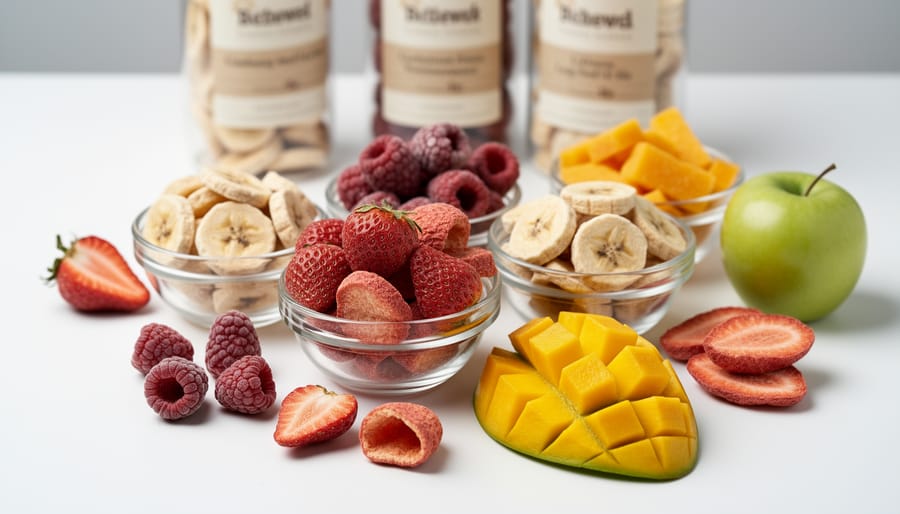
What makes this different from dehydrating? A standard dehydrator blasts food with warm air, which shrinks cells, concentrates sugars, and fundamentally changes texture. Strawberries turn leathery. Tomatoes become chewy. Freeze drying, by contrast, leaves the cellular structure intact. When you rehydrate freeze-dried strawberries, they plump back up nearly identical to fresh ones because those cells never collapsed.
Canning operates on completely different principles. You’re using heat and pressure to kill bacteria and create a seal, but you’re also cooking the food in the process. Green beans stay soft, pickles get that distinct canned taste, and nutrients degrade from the heat exposure. Freeze-dried foods retain about 97% of their original nutrients because they never see high temperatures.
The trade-off? Time and energy. Freeze drying takes anywhere from 20 to 40 hours per batch, and those vacuum pumps and heating elements draw significant electricity. Dehydrators finish in 6 to 12 hours with less power. Canning happens in an afternoon with minimal energy beyond your stovetop.
But the payoff is unmatched shelf stability. Properly freeze-dried food lasts 25 years or more in sealed containers, compared to a year or two for most dehydrated items and a few years for home-canned goods. That longevity matters when you’re thinking about reducing waste, preserving seasonal abundance, or building truly resilient food storage systems.
The Sustainability Case for Home Freeze Drying
Cutting Food Waste at the Source
The numbers tell a sobering story: the average household throws away nearly a third of the food it purchases, much of it because produce ripens faster than families can consume it. Freeze drying addresses this problem at the most critical point, the moment when fresh food would otherwise spoil. Unlike refrigeration, which buys you days or weeks, freeze drying can preserve fruits, vegetables, and complete meals for 25 years when stored properly, transforming perishable abundance into long-term food security.
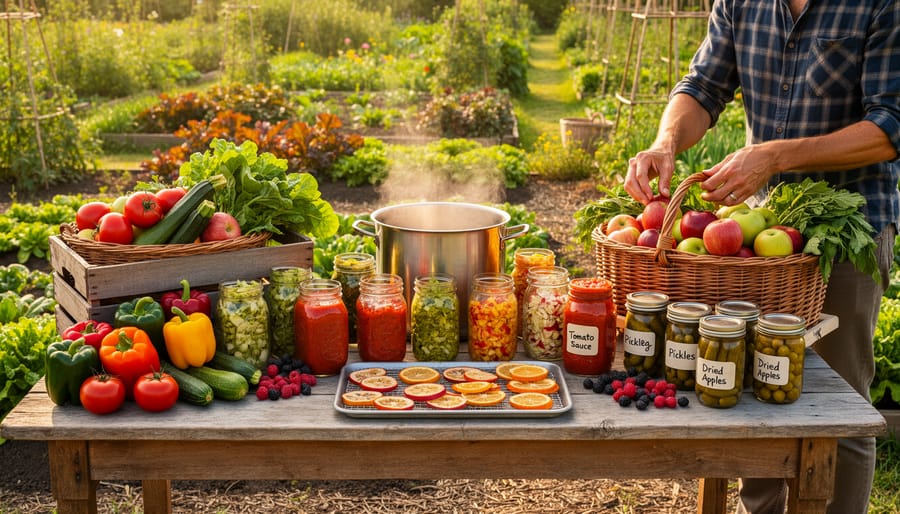
This preservation power becomes transformative during garden harvest season. A single zucchini plant can produce more fruit than most families eat fresh, and tomato plants often ripen dozens of pounds within weeks. Instead of desperately making the twentieth batch of zucchini bread or watching tomatoes rot on the counter, gardeners can preserve their surplus at peak ripeness. One Oregon family documented saving 43 pounds of garden produce in a single summer, food that would have otherwise ended up composted or discarded, by freeze drying weekend batches and storing them in sealed containers.
Food waste isn’t just about what we throw away, it’s about the resources we wasted to grow food that never gets eaten, the water, energy, and time that vanish when perfectly good produce hits the compost bin.
The same principle applies to grocery purchases gone wrong. Those herb bunches you bought for one recipe, the berries that started molding before movie night, the milk approaching its expiration date, all candidates for cutting food waste through preservation. Community groups have started freeze-drying meal programs specifically targeting this problem, collecting surplus food from multiple households and batch-processing it together, then redistributing the preserved meals. This transforms individual waste into shared resources.
The Energy Equation: Being Honest About the Trade-Offs
Let’s address the elephant in the room: freeze dryers consume significant electricity. A typical home unit draws 1,500 to 2,400 watts during operation, and a single batch can run 20 to 40 hours. That’s substantial energy use that we can’t ignore in honest sustainability conversations.
The comparison matters, though. Running a standard refrigerator-freezer for a year uses roughly 400 to 600 kWh. Freeze drying 50 pounds of produce might consume 60 to 100 kWh total, but those foods then require zero refrigeration for decades. When you compare the energy cost of freeze drying a summer’s garden harvest once against running a freezer continuously for years to store the same food, the equation shifts. Add in that 30-40% of conventionally refrigerated produce still gets thrown away, and you’re potentially wasting both the food and all the energy that kept it cold.
Commercial food production provides another perspective. Industrial freeze drying, transportation networks, and refrigerated supply chains combined use far more energy per pound of food than home processing. When you preserve surplus from local sources, you’re eliminating distribution emissions entirely.
The most sustainable approach combines freeze drying with renewable energy. Households investing in solar-powered energy systems can run batch cycles during peak sun hours, effectively zeroing out the carbon footprint. Even without solar, strategic practices help: run full loads only, process seasonally abundant foods worth preserving, and coordinate community batches to maximize efficiency. The technology itself isn’t inherently sustainable, your choices around when, what, and how you use it determine its environmental value.
From YouTube Entertainment to Real-World Impact
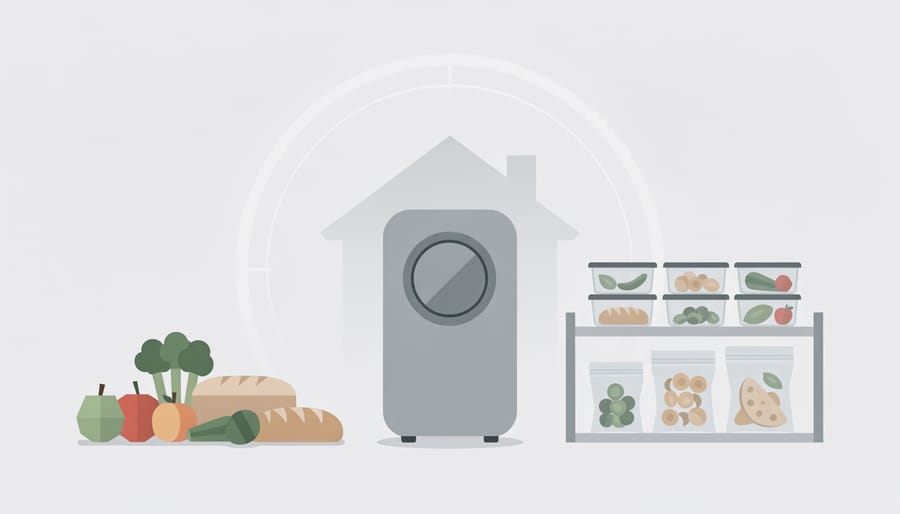
While millions watch candy being freeze dried for entertainment, a quieter revolution is happening in garages, community centers, and emergency shelters across North America. People who discovered freeze drying through YouTube are now using the technology to address real food security challenges in their communities.
The Mobile Food Preservation Project in Portland, Oregon started when a local homesteader’s freeze-drying videos went viral. Rather than just creating content, she partnered with urban gardens and food banks to preserve surplus harvests that would otherwise rot. Her machine now processes over 500 pounds of produce monthly, turning short-season abundance into year-round nutrition for families experiencing food insecurity. The preserved meals require no refrigeration, making them ideal for people without reliable access to electricity.
In rural Montana, a network of ranchers and homesteaders share three freeze dryers between twelve families. They coordinate batch processing of garden surpluses, wild game, and bulk purchases, dramatically reducing each household’s food waste while building climate resilience through decentralized food storage. When wildfires threatened evacuations last summer, families had lightweight, shelf-stable food ready to grab, nutrition that didn’t depend on grocery supply chains.
Emergency preparedness organizations have taken notice too. Several community resilience programs now include freeze dryer training alongside traditional canning workshops. In earthquake-prone regions of California and British Columbia, community centers maintain machines that residents can reserve for preserving emergency food supplies. These programs explicitly reject the disposable, entertainment-focused content that dominates YouTube, instead teaching systematic preservation of nutrient-dense staples.
What makes these initiatives sustainable isn’t the technology itself, but the intentional, community-centered approach. Shared machines mean lower per-person energy use and cost. Coordinated batch processing maximizes efficiency. Focus on surplus preservation rather than novelty items reduces overall environmental impact. These examples prove that freeze drying can move beyond viral entertainment to become a practical tool for food security when deployed thoughtfully within communities committed to genuine sustainability goals.
What You Can (And Should) Freeze Dry for Maximum Sustainability
The strategic answer to “what should I freeze dry?” isn’t about what makes the most entertaining YouTube content. It’s about what delivers genuine environmental value for the energy invested.
| Food Category | Sustainability Impact | Shelf Life Gain | Best Use Cases |
|---|---|---|---|
| Surplus garden produce | High – prevents waste, replaces winter imports | 25+ years | Peak harvest gluts, bumper crops |
| Complete homemade meals | High – batch cooking efficiency, eliminates takeout | 15-25 years | Emergency prep, convenience foods replacement |
| Seasonal abundance (berries, mushrooms) | Moderate to High – captures peak nutrition, local sourcing | 20-25 years | Short-season foods, foraged items |
| Candy and novelty items | Low – entertainment value only | Not applicable | Social media content, not sustainability |
The foods that justify the energy cost share common traits. They’re items you’d otherwise lose to spoilage, things that would require long-distance shipping when out of season, or complete nutrition packages that replace wasteful convenience options. That September zucchini avalanche your neighbors hide from? Perfect candidate. Those mushrooms you foraged during a brief spring window? Excellent choice. The 18 pounds of strawberries you picked at the local farm in June? Absolutely.
Complete meals deserve special attention. Freeze drying a batch of homemade soup or stew concentrates the effort of cooking once into dozens of future meals, replacing the environmental cost of restaurant delivery or heavily packaged frozen dinners. real-world examples from food recovery programs show how this approach transforms surplus into accessible nutrition while cutting the carbon footprint of meal preparation.
What doesn’t make environmental sense? Freeze drying store-bought, shelf-stable items for novelty. Running the machine for single servings. Processing foods that keep well anyway or that you could easily dehydrate with passive solar methods. The YouTube freeze drying trend features plenty of fun experiments with candy and treats, but sustainability-focused users prioritize foods that would otherwise spoil, require refrigeration, or disappear from local availability for months.
The measurement that matters is simple: would this food go to waste, require ongoing energy to store, or need to be shipped from far away during its off-season? If the answer is yes, freeze drying makes sense. If you’re doing it purely for novelty, at least be honest about the trade-off.
Making Freeze Drying Work for Your Sustainable Lifestyle
Starting Small: Alternatives and Community Options
Not everyone needs to own a freeze dryer to benefit from the technology. Community-based models are emerging that make freeze drying more accessible while reducing the environmental footprint of individual ownership.
Several communities now operate shared freeze dryers through tool libraries, maker spaces, and food preservation co-ops. Members pay modest fees or volunteer hours for machine access, spreading the considerable upfront cost across dozens of households. Some church groups and community gardens have purchased machines collectively, scheduling batch processing sessions where neighbors gather to preserve seasonal abundance together. This model maximizes machine utilization while building food security networks.
Food banks and extension offices in some regions offer freeze drying services for a small fee, particularly during harvest seasons when gardeners face surplus produce. These programs often prioritize low-income families and provide training alongside equipment access.
For those without any freeze drying access, traditional preservation methods remain remarkably effective for sustainability goals. Modern canning techniques using water bath or pressure methods preserve most foods with minimal energy. Improved dehydrators with temperature controls and efficient airflow handle fruits, vegetables, and herbs using less power than freeze dryers. Root cellaring and fermentation require virtually no energy while extending shelf life significantly.
The key is matching your preservation method to your actual needs rather than chasing trends. A well-stocked pantry built through accessible techniques beats an unused expensive machine every time.
Best Practices for Eco-Conscious Freeze Drying
Once you’ve decided to integrate freeze drying into your sustainable routine, these practices will help you maximize environmental benefits while minimizing resource use.
- Run full loads only. Partially filled trays waste the same energy as full ones. Coordinate with neighbors or plan ahead to accumulate enough food for complete batches.
- Group foods by drying time. Process similar items together since berries finish faster than meat or stews. This prevents running the machine longer than necessary for mixed loads.
- Pre-freeze strategically. Use your regular freezer to pre-freeze items, which can cut freeze drying time by 30-40%. Schedule this during off-peak electricity hours when grid demand is lowest.
- Maintain your machine religiously. Clean vacuum pumps, replace oil on schedule, and check seals regularly. A well-maintained unit runs more efficiently and lasts decades instead of years.
- Time runs for renewable energy peaks. If you have solar panels, start cycles mid-morning to capture maximum sun. Even without panels, many utilities offer cheaper rates during high renewable generation periods.
- Store properly to protect your investment. Use minimal packaging, but ensure airtight seals with oxygen absorbers. Losing a batch to moisture means wasting all the energy that preserved it.
Integrate freeze drying with your broader food systems rather than treating it as a standalone activity. Preserve what you’ve grown yourself, sourced from local farmers, or rescued from waste streams. Pair it with composting inedible parts, rainwater collection for garden irrigation, and community food sharing networks. The connection between sustainable food preservation and water and health extends throughout your entire food production cycle.
Consider your freeze dryer a shared community resource. Organize preservation parties where neighbors bring surplus produce and divide the processed food. This transforms an energy-intensive appliance into a tool for community resilience while distributing both costs and benefits across multiple households.
YouTube’s viral freeze drying videos have done something remarkable: they’ve made food preservation entertaining enough to reach millions who might never have considered it otherwise. What started as quirky content about transforming Skittles and ice cream has sparked genuine conversations about extending shelf life, reducing waste, and taking control of our food systems.
The real story isn’t the technology itself. Home freeze dryers have existed for years. What’s changed is awareness, accessibility, and most importantly, community. When people share their successes and failures online, they’re building collective knowledge that makes sustainable practices less intimidating and more achievable.
Freeze drying becomes a sustainability tool when we use it intentionally. That means preserving surplus garden harvests, not just novelty candy. It means coordinating with neighbors to share machines and reduce individual energy costs. It means choosing this method for foods where it genuinely prevents waste rather than creates content.
You don’t need a freeze dryer to participate in this shift toward thoughtful food preservation. Start where you are. Learn traditional canning if that fits your budget. Join a community sharing program. Improve your dehydrating game. The point isn’t adopting every new technology, it’s finding the preservation methods that work for your life, your values, and your resources.
The intersection of viral content and environmental action reminds us that sustainability spreads through stories, not lectures. Share what works. Learn from others. Build the food-resilient future we need, one preserved meal at a time.