

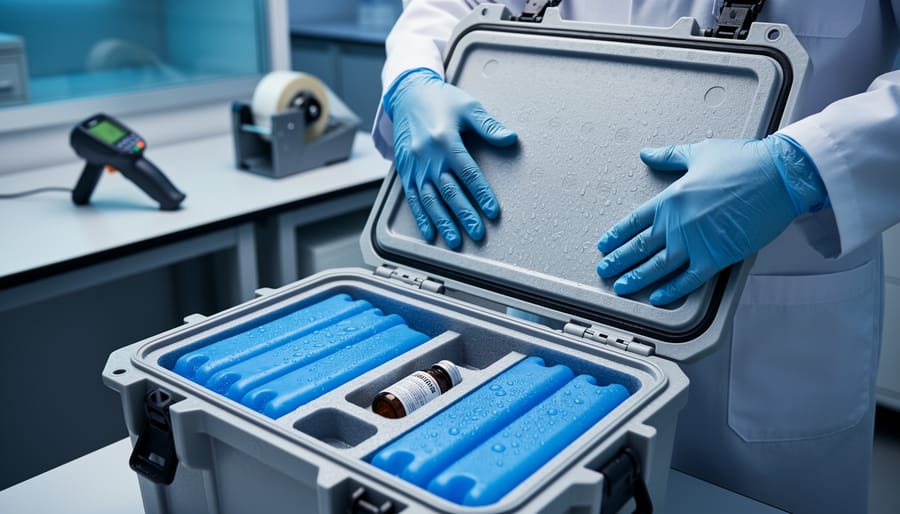
Cold chain shipping protects Researched Peptides retatrutide and other research peptides by keeping them within a steady, cool temperature range from the moment they leave the lab until someone opens the box. In practice, that means insulated packaging, the right coolant, a fast transit time, and a plan for what happens when a package arrives and no one is there to take it in. Get those four things right and you preserve the product. Skip one and you can lose the whole shipment.
Here’s why it matters. Peptides are short chains of amino acids, and heat, moisture, and repeated temperature swings can break them down before they ever reach a bench. A vial of something sensitive may look unchanged after a warm day on a loading dock, yet its purity can quietly drift. Degraded material means unreliable results, wasted funding, and a second shipment to replace the first.
The good news is that this is a solvable problem. Right-sized boxes, reusable coolants, and careful scheduling cut spoilage and shrink packaging waste at the same time. This guide covers what cold chain means, who needs to follow it, how to complete a compliant shipment step by step, and where to turn for help.
What Cold Chain Shipping Is and Why Peptides Need It
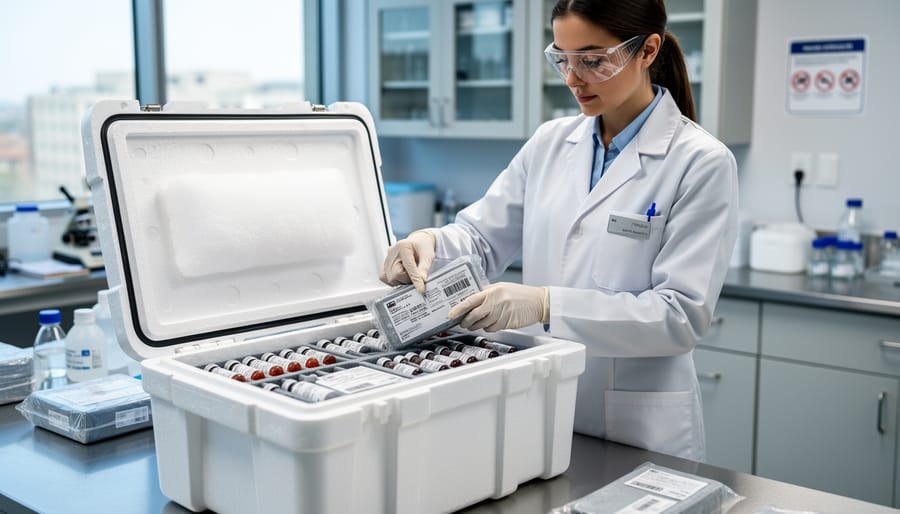
How Heat, Moisture, and Time Change a Peptide
Peptides are chains of amino acids held together by chemical bonds, and heat gives those bonds the energy to break or rearrange. Warmer conditions speed up hydrolysis, where water molecules snip the chain apart, and oxidation, where oxygen alters sensitive amino acids such as methionine and cysteine. Some peptides also clump together, a process called aggregation, which can leave a cloudy solution or a sample that no longer behaves like the original.
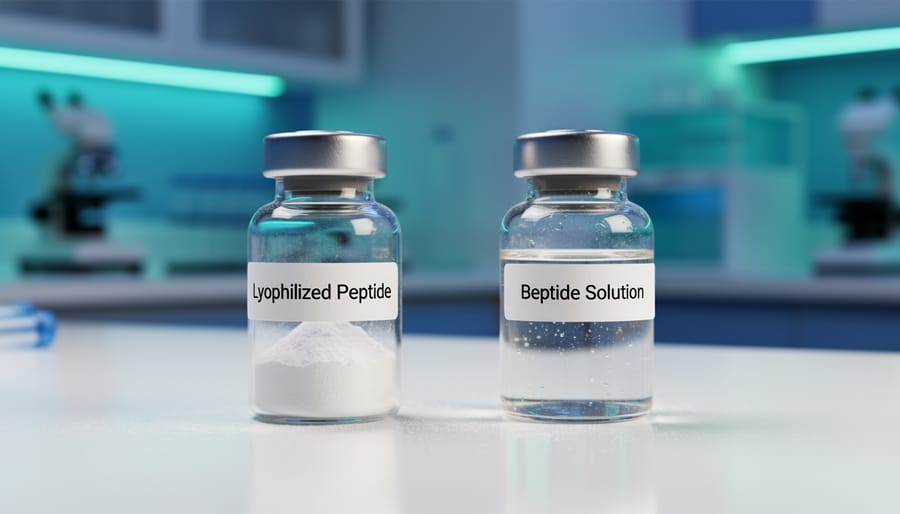
Moisture matters most for lyophilized peptides. The freeze-drying process removes water so the powder stays stable, but if humidity creeps back in during transit, the peptide begins to degrade as though it were in solution. Time compounds every one of these effects. A short warm spell may do little, while days of mild excursions add up.
For researchers, the damage is often invisible. A degraded sample can look normal yet contain less active peptide than the label says. That leads to results that drift between experiments, assays that fail for no clear reason, and weeks spent troubleshooting a problem that began in the shipping box. Replacing compromised samples also means more material, more packaging, and more waste, which is why protecting stability upfront pays off for both science and sustainability.
Temperature Ranges Used in Peptide Shipping
Peptides don’t all travel the same way. Suppliers generally sort shipments into a few temperature categories, and each one matches how the material is formulated and how long it needs to stay stable in transit.
| Shipping condition | Typical coolant | General use case | Key consideration |
|---|---|---|---|
| Ambient | None or light insulation | Stable lyophilized peptides on short routes | Avoid heat exposure and moisture |
| Refrigerated (2-8°C) | Gel packs | Many lyophilized and reconstituted peptides | Keep packs from freezing the product |
| Frozen (around -20°C) | Frozen gel packs or phase-change materials | Peptides in solution or long-transit shipments | Limit freeze-thaw cycles |
| Ultra-cold (-70°C or below) | Dry ice | Highly sensitive or long-term material | Dry ice sublimates, so pack enough for delays |
Think of this table as a general map, not a rulebook. The right category for your peptide depends on its sequence, form, and formulation, so always follow the supplier’s documentation, usually the certificate of analysis or technical data sheet. Matching the category to the product also keeps packaging right-sized, which means less excess coolant and less waste.
Who Needs a Validated Cold Chain: Eligibility and Requirements for Shipping Peptides
Cold chain protocols apply to more people than most labs expect. If you handle research peptides at any point between synthesis and the bench, you share responsibility for keeping them in range.
That includes suppliers, who package and label the product and set its storage specification. It includes academic labs and contract researchers, who often ship samples between sites or order materials for time-sensitive studies. It also includes institutional receiving departments, which decide how a package is logged, stored, and handed off. A single weak link, like a package left on a loading dock over a weekend, can undo careful packing at the other end.
Several sets of requirements usually apply at once:
– Supplier storage specifications. The certificate of analysis or technical data sheet states the required temperature, and it overrides general rules of thumb.
– Institutional policies. Biosafety committees and receiving offices may require registration, approved storage locations, or designated delivery points.
– Carrier restrictions. Carriers set their own rules on dry ice quantities, packaging marks, and service levels for temperature-sensitive goods.
– Regulations for research-use materials. Labeling, import and export controls, and hazard classifications differ by country and sometimes by region.
Before a shipment leaves or arrives, it helps to confirm the following:
- The supplier’s written storage specification for the exact product and form.
- Qualified packaging and coolant tested for the expected transit time.
- A carrier service level that fits the temperature window, such as priority overnight.
- A named receiving contact and the hours they are on site.
- Required documentation, including labels, invoices, and any hazard or dry ice markings.
- Institutional approvals, such as biosafety sign-off or receiving-office registration.
Requirements change by jurisdiction and institution, so treat this list as a starting point, not a legal opinion. For anything specific to your situation, check with your institution’s research compliance or receiving office, the supplier’s technical support team, and the carrier’s published guidance for temperature-controlled and dry ice shipments. A short call before the first shipment of a new material is usually faster, and far less wasteful, than sorting out a spoiled package afterward.
How to Ship and Receive Peptides Step by Step: Completing the Cold Chain Process
Choosing Packaging and Coolants That Hold Temperature Without Excess Waste
Picking the right packaging is a balancing act. Too little insulation risks a temperature excursion, while oversized boxes packed with extra coolant waste material and money. The goal is a shipper sized to the product, the route, and the expected transit time.
| Option | Typical Use | Handling Needs | Environmental Notes |
|---|---|---|---|
| Insulated shipper (EPS, PU foam, or paper-based) | Base container for any cold shipment | Match size to payload to limit dead air space | Reusable and recyclable versions exist |
| Gel packs | Refrigerated (2-8 °C) shipments | Pre-condition to the right temperature before packing | Reusable; check local rules for disposal |
| Dry ice | Frozen or ultra-cold shipments | Needs vented packaging, labeling, and carrier approval | Sublimates, so leaves no liquid waste |
| Phase-change materials (PCMs) | Tight temperature bands over longer transits | Condition at the PCM’s specific set point | Often reusable many times |
Most lyophilized peptides are shipped cool or ambient with a short transit, so a smaller shipper with gel packs or PCMs is often enough. Always follow the supplier’s stated storage requirements before choosing a coolant.
Waste reduction is a practical habit. Right-size boxes, ask suppliers about return programs for reusable shippers, and sort materials correctly when the package arrives. Gel packs often can be reused for internal cold storage, and dry ice should simply be left in a ventilated area to sublimate.
Reusable shipper programs in the broader life-sciences sector show this works: companies that move from single-use foam to returnable, validated containers report fewer failed shipments and less discarded packaging. Even without a formal program, a lab can start small by tracking how often shippers get thrown out and asking its supplier about lighter, recyclable options that still pass temperature validation.
Monitoring Temperature and Responding to an Excursion
A temperature logger is the most reliable witness a shipment has. These small devices record readings at set intervals, so you can see not just whether a package went out of range, but when and for how long. Simpler indicators, like color-change strips or threshold tags, flag only that a limit was crossed. Both are useful, but a logger tells the fuller story.
On arrival, check the device before you unpack anything else. Download or read the logger data, compare it against the range in the supplier’s documentation, and note the peak and duration of any deviation. Also look at the packaging itself: are the coolants fully thawed, is the shipper dented, did it arrive later than promised? Photograph everything.
If the readings are out of range, act in order:
– Document: Save the logger file, photos, tracking details, and the time of receipt.
– Quarantine: Label the vials and store them as the supplier specifies, away from usable stock.
– Contact the supplier: Share your records and ask for their stability data on that excursion.
– Decide: Use, test, or replace the material based on their guidance and your institution’s policy.
Clear records also make replacement or credit requests straightforward, and they help your team spot recurring weak points in a route.
Rights and Obligations for Senders, Carriers, and Receiving Labs
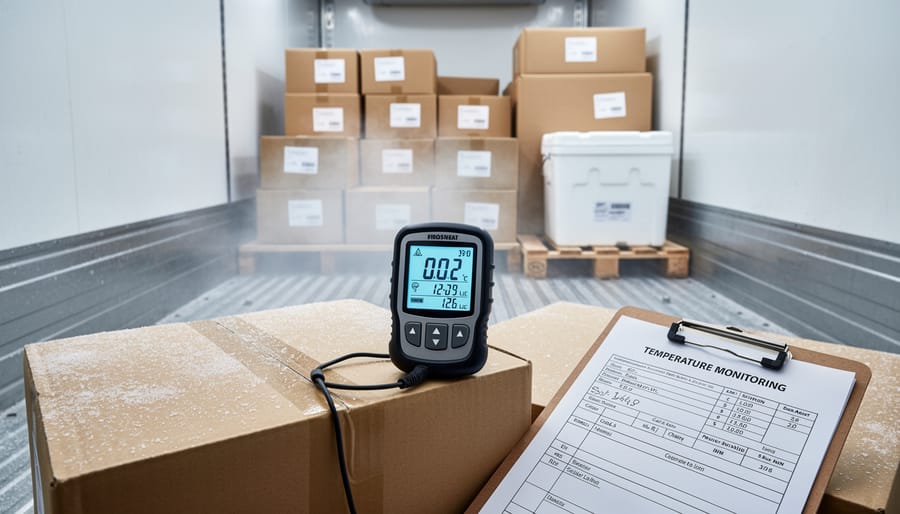
A good cold chain works like a relay: each party hands the shipment to the next in the condition promised. Clear responsibilities keep that handoff smooth, and they make it easier to fix things quickly when something goes wrong.
Suppliers are generally responsible for packaging that matches the product’s storage requirements, accurate labeling, and sending documentation with the shipment. Choosing a well-sized shipper also helps here. Right-sized, reusable packaging can reduce food waste in the cold chains where it already works, and the same thinking cuts the discarded product and excess materials that come with peptide shipments. Efficient routing and fewer reshipments can also help cut GHG emissions.
Carriers commit to handling instructions and delivery windows. Their specialty healthcare logistics teams can usually advise on service levels before you book.
Here is what each side typically owes the other:
- Shipper: pack to the supplier’s stated temperature requirements.
- Shipper: label contents, handling instructions, and storage conditions accurately.
- Shipper: include a temperature logger or indicator and a packing list.
- Shipper: share tracking details and respond promptly to questions.
- Receiving lab: accept delivery promptly and move product to proper storage.
- Receiving lab: inspect the package and read the logger on arrival.
- Receiving lab: document any excursion with photos and notes.
- Receiving lab: notify the supplier and carrier without delay.
When a shipment arrives compromised, many suppliers offer replacement or credit, but the terms depend on your contract, the supplier’s policy, and the carrier’s conditions. Claim windows can be short, sometimes days, so check them before you order rather than after a problem. Keep records of order confirmations, logger data, inspection notes, and correspondence. They support a claim and show where a process can improve, which in turn supports waste reduction across the whole chain. Approaching these steps collaboratively usually gets everyone to a fair outcome faster.
Where to Get Help: Standards, Suppliers, and Institutional Support
You don’t have to solve cold chain questions alone. A few well-chosen contacts can save a shipment, and a lot of wasted product, before anything leaves the building.
Start close to home. Your institution’s research compliance office or central receiving department usually knows the local rules for incoming biological and chemical materials, including who signs for packages, where cold items get stored, and how to report a problem. They can also tell you whether a new peptide needs extra paperwork.
Next, call your supplier’s technical support team. They know the product’s storage and stability data better than anyone, and they can confirm the right temperature range, how long the material tolerates transit, and what to do if a shipment arrives warm. Ask them about reusable or right-sized packaging options while you’re on the phone.
Major carriers also run specialty healthcare logistics teams that handle temperature-sensitive freight every day. They can advise on service levels, dry ice handling limits, and transit-time risks for your route.
For broader guidance, look to recognized standards and guidance bodies on temperature-controlled transport, such as pharmacopeial organizations and international standards groups. Their published guidance on packaging qualification and temperature monitoring gives you a trustworthy benchmark.
Reach out before shipping a new or high-value material, not after something goes wrong. One short conversation up front is far cheaper than replacing a compromised shipment.
Common Questions About Cold Chain Shipping and Peptide Stability
How long can peptides sit at room temperature in transit?
There is no single answer, because it depends on the specific peptide, its form, and the supplier’s stability data. Many lyophilized peptides tolerate short ambient exposure, but always check the supplier’s documentation and treat any unplanned delay as something to record and report.
Is dry ice always needed?
No. Dry ice is typically reserved for materials that must stay frozen, while many lyophilized peptides ship with gel packs or phase-change materials at refrigerated temperatures. Let the supplier’s storage specification decide, not habit.
Do lyophilized and dissolved peptides ship the same way?
Not usually. Freeze-dried peptides are generally more stable and forgiving in transit, while peptides in solution are more vulnerable to hydrolysis, oxidation, and aggregation, so they often need tighter temperature control and shorter transit times.
What should I do if a shipment arrives out of range?
Document the logger reading, quarantine the package, and contact the supplier before using anything. Their guidance will tell you whether to use or replace the material.
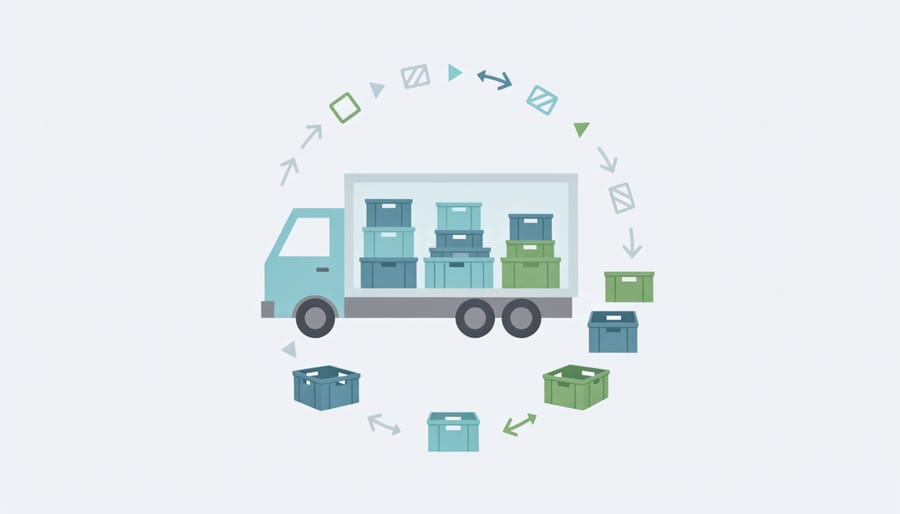
Reducing packaging waste doesn’t have to mean cutting corners on protection. Start by matching the shipper’s size to the load, since oversized boxes need extra coolant and fill to hold temperature. From there, ask your supplier about reusable insulated shippers, return programs, and recyclable liners. These right-sized choices protect the product and cut the material that ends up in the bin.
A good habit is to share what works across your institution. When one lab finds a packaging setup that holds temperature reliably with less material, others can adopt it, and the savings in discarded product and disposal add up quickly.
A well-managed cold chain does two jobs at once. It keeps peptides intact so your results can be trusted, and it keeps materials, packaging, and effort from going to waste. Every sample that arrives in good condition is a sample that does not need to be reordered, reshipped, or thrown away.
The good news is that the biggest gains come from small, practical habits. Confirm the supplier’s storage requirements before anything ships. Pack with the right amount of coolant instead of the most. Check the temperature logger on arrival, and write down what you find. None of these steps needs special equipment, and each one adds up across a lab, a department, and a campus.
Here is a simple place to start this month. Review how your group ships and receives peptides today. Ask your suppliers whether reusable or right-sized packaging is available. Then share what works with colleagues, so one lab’s good practice becomes the whole institution’s standard.